
Employment Law Changes for 2026–2027: What Public Sector and Education Leaders Need to Know
The next two years will bring some of the most significant employment law reforms in over a decade. For public sector organisations and education institutions, these changes will reshape how you manage staff, structure contracts, and respond to workplace issues.
With new rights, new enforcement bodies, and new expectations on employers, it’s essential to understand what’s coming and to prepare early. At Dukefield, we know that navigating legal change can feel challenging, especially when resources are stretched and compliance risks are high. This guide breaks down the key updates in clear, practical terms so you can plan with confidence.
Why These Changes Matter
Public sector and education employers already operate in complex environments: tight budgets, high scrutiny, and a duty to support diverse workforces. The upcoming reforms increase employee protections and expand employer responsibilities, meaning policies, contracts, and procedures will need careful review.
With the right procurement and legal support, adapting to these changes can be smooth and cost‑effective. Understanding the landscape now will help you avoid disputes later and ensure your organisation remains compliant and fair.
Key Employment Law Changes (2026–2027)
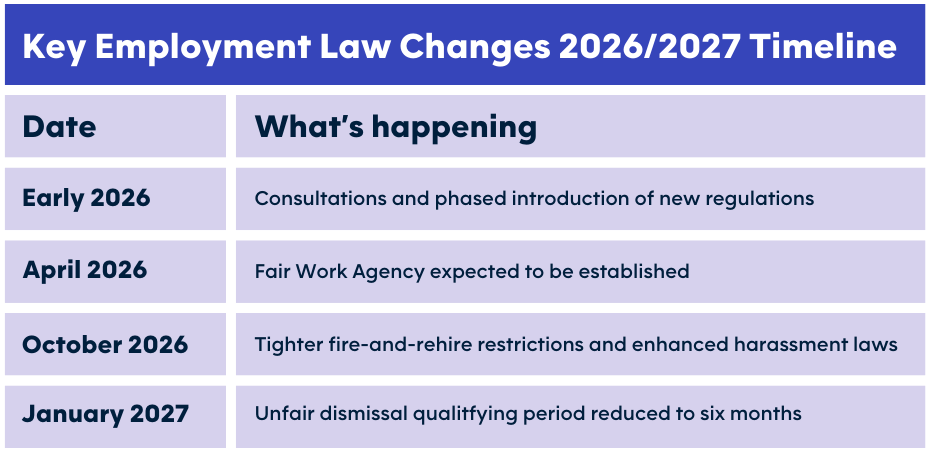
1. Unfair Dismissal: Qualification Period Reduced to Six Months (from 1 January 2027)
The qualifying period for bringing an unfair dismissal claim will drop from two years to just six months.
What this means for employers:
Probation periods will need rethinking. A six‑month probation may no longer offer the protection it once did.
Managers will need clearer guidance on performance management from day one.
Documentation and early intervention will become even more important.
For public sector and education settings, where fixed‑term and term‑time contracts are common, this shift could significantly increase exposure to claims if processes aren’t robust.
2. Fire and Rehire: Stricter Rules and Automatic Unfair Dismissal
From October 2026, dismissing an employee for refusing contractual changes will become automatically unfair, except in very limited circumstances.
Implications:
Organisations must engage in genuine consultation before proposing contractual changes.
Cost‑saving restructures will require more planning and legal oversight.
Procurement of HR and legal expertise will be essential to avoid missteps.
This is particularly relevant for institutions undergoing restructures or budget‑driven workforce changes.
3. Zero‑Hours Contracts: New Rights to Predictability
Workers on zero-hour arrangements will gain:
A right to guaranteed hours based on their actual working patterns over a reference period.
Compensation for cancelled shifts.
For sectors that rely on casual or sessional staff — such as education, leisure services, and community programmes — this will require a shift toward more predictable scheduling and clearer contract terms.
4. Sick Pay: Statutory Sick Pay (SSP) Available from Day One
Two major changes are coming:
The three‑day waiting period will be removed.
The earnings threshold will be scrapped.
Why this matters:
More employees will qualify for SSP.
Absence management policies will need updating.
Budget planning may need to account for increased SSP costs.
This is especially relevant for organisations with large numbers of part‑time or lower‑paid staff.
5. Flexible Working: Strengthened Day‑One Rights
Employees will be able to request flexible working from their first day of employment, and employers must provide reasonable grounds for refusal.
Practical considerations:
Policies must reflect the new statutory framework.
Managers will need training to ensure consistent decision‑making.
Organisations may see an increase in requests, particularly for hybrid or adjusted hours.
Clear processes will help avoid disputes and ensure fairness across teams.

6. Family Rights: Day‑One Eligibility for Paternity and Parental Leave
Paternity leave and unpaid parental leave will become day‑one rights.
This means:
HR teams must be prepared to process requests earlier.
Employee handbooks and onboarding materials will need to be updated.
Managers will need clarity on entitlements and cover arrangements.
These changes support workforce wellbeing but require operational planning.
7. Harassment: Stronger Employer Duties and Third‑Party Liability
From October 2026, employers will face an enhanced duty to prevent sexual harassment, including liability for harassment by third parties such as:
Contractors
Visitors
Service users
For public‑facing organisations (schools, councils, healthcare settings), this is a significant shift.
Employers will need:
Updated training programmes
Clear reporting pathways
Stronger safeguarding and visitor‑management procedures
Evidence of proactive prevention measures
This is an area where external legal guidance can be particularly valuable.
8. Tribunal Time Limits Extended to Six Months
Time limits for bringing claims, including unfair dismissal, will increase from three to six months.
This may lead to:
More employees seeking advice before submitting claims
Longer periods of uncertainty following disputes
Greater need for early resolution and mediation
Robust processes and early intervention will help reduce the risk of escalation.
9. Fair Work Agency (FWA): Launching April 2026
A new statutory body, the Fair Work Agency, will oversee enforcement of:
Minimum wage
Sick pay
Holiday pay
Other core employment rights
Public sector organisations should expect:
More proactive compliance checks
A need for clearer audit trails
Increased emphasis on fair work practices
This reinforces the importance of accurate record‑keeping and compliant procurement of HR and payroll services.
What Public Sector and Education Leaders Should Do Now
These reforms require more than simple policy updates. They call for a strategic review of how your organisation manages people, risk, and compliance.



1. Review Contracts and Probation Policies
Ensure terms reflect new rights around dismissal, zero‑hours arrangements, and flexible working.
2. Strengthen HR Procedures
Clear, consistent processes will be essential to avoid claims, especially with extended tribunal time limits.
3. Train Managers Early
Front‑line managers will be making decisions that carry greater legal weight. Training should cover:
Handling flexible working requests
Managing performance from day one
Understanding new family and harassment rights
4. Audit Workforce Practices
Particularly in areas such as:
Casual staffing
Shift scheduling
Pay and holiday calculations
5. Use Procurement to Access Specialist Legal Support
With so many changes arriving in quick succession, accessing expert advice through compliant procurement routes will help you stay ahead and avoid costly mistakes.
Dukefield’s Legal Services Framework connects organisations with trusted legal partners who understand the unique pressures of public sector and education environments.
The Importance of Being Proactive
The 2026–2027 employment law reforms are designed to strengthen worker protections and promote fairer workplaces. For public sector and education leaders, they also bring new responsibilities and the need for careful planning.
By reviewing your policies now and securing the right expertise through compliant procurement frameworks, you can navigate these changes confidently and ensure your organisation remains compliant, resilient, and supportive of its workforce.
If you’d like help sourcing legal specialists or reviewing your current arrangements, Dukefield is here to support you every step of the way.